
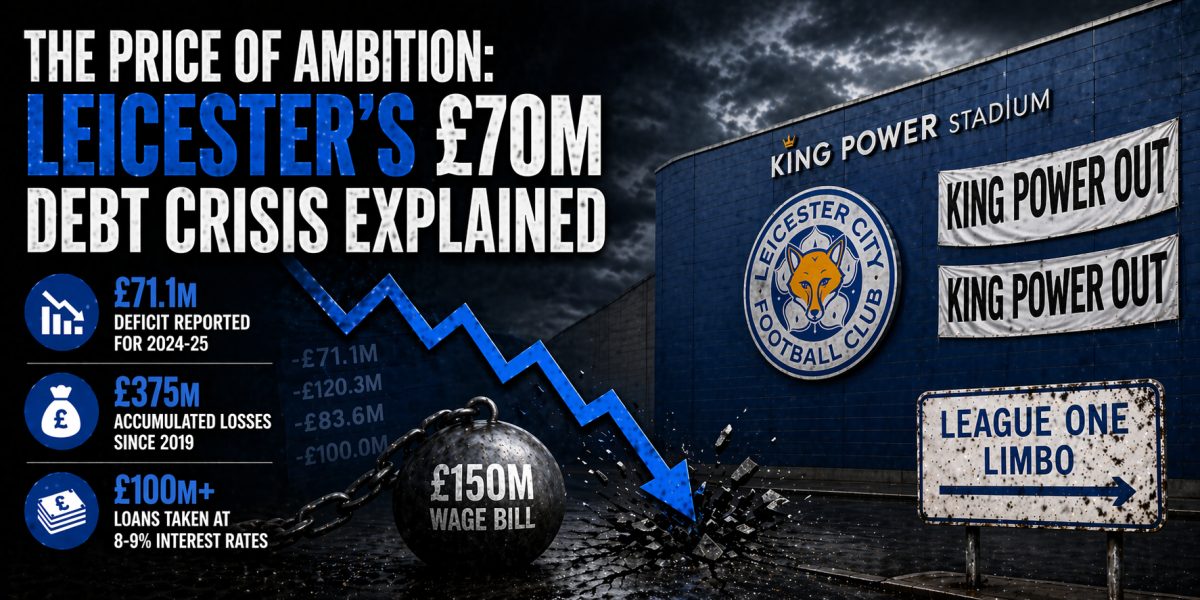
Leicester City’s fall from Premier League comfort to League One limbo was confirmed Tuesday when a 2-2 draw with Hull City sealed their fate. The King Power Stadium, once a fortress of ambition, fell silent as supporters protested with “King Power Out” banners draped across sparse stands. Only the fifth club to suffer back-to-back relegations to the third tier, Leicester now confront a financial reckoning that threatens to dwarf their sporting catastrophe.
The Debt Trap
The numbers tell a devastating story. Leicester reported a £71.1m deficit for 2024-25 when competing in the Premier League. Accumulated losses since 2019 have spiralled to £375m. Rather than tighten their belts, the club mortgaged tomorrow to pay for today.
Loans worth at least £100m have been taken from Macquarie, an Australian investment bank, at punishing rates of 8-9%. These advances cashed in future transfer fee instalments—most recently in September, bringing forward money from Tom Cannon, Kasey McAteer and James Justin sales. In January, Leicester rolled over their parachute payment loan, pulling forward the final £35m tranche due in 2026-27.
“This is going to be the big challenge,” football finance expert Kieran Maguire told BBC Sport. “They will be in receipt of second-year parachute payments, but it looks as if they have already cashed those in through Macquarie.”
 Advertisement
The Wage Albatross
A Premier League wage bill of £150m becomes an anchor in League One. Even halved to £70m, it represents an impossible burden for a third-tier club.
Oliver Skipp is contracted through 2029. Jannik Vestergaard signed a three-year deal at age 31 in 2024. Harry Winks, reportedly earning £90,000-per-week, triggered an automatic contract extension following the 2024 Premier League promotion. Offloading these players will prove agonisingly difficult.
“The average total salary in League One is around £9.5m,” Maguire noted. “Last season, Birmingham’s was £38.9m and that was the highest-ever in League One. Leicester’s wage bill is going to be substantially higher than that, even with relegation clauses.”
The Black Hole
With future income already spent or pledged, Leicester faces a £70m realistic reduction in annual revenue. Premier League football generates approximately £100m; even accounting for parachute payments of around £60-70m in the Championship, League One will yield barely £2m from the television deal.
The King Power Group, a travel retail business specializing in duty-free shopping, has endured difficult times since the pandemic and underwent restructuring last year. Their capacity to inject fresh capital appears exhausted.
“Where is the money coming from?” Maguire asked. “If it’s not going to be the owners, that’s where you start to get twitchy. They are just going to have to absorb the losses which they will incur in League One. I don’t see what else they can generate cash from.”
Birmingham absorbed £34m in losses last season and bounced back. A prolonged League One stay could prove far more catastrophic for Leicester. The foxes face not merely a sporting challenge, but an existential financial crisis—and rock bottom may still lie ahead.