


| 1X2 | Home | Draw | Away | |
|---|---|---|---|---|
|
Coolbet
|
5.50 | 4.55 | 1.56 | Go to Coolbet → |
|
ComeOn
|
5.30 | 4.50 | 1.57 | Go to ComeOn → |
|
Unibet
|
6.00 | 4.80 | 1.54 | Go to Unibet → |
|
Norsk Tipping
|
5.10 | 4.20 | 1.50 | Go to Norsk Tipping → |
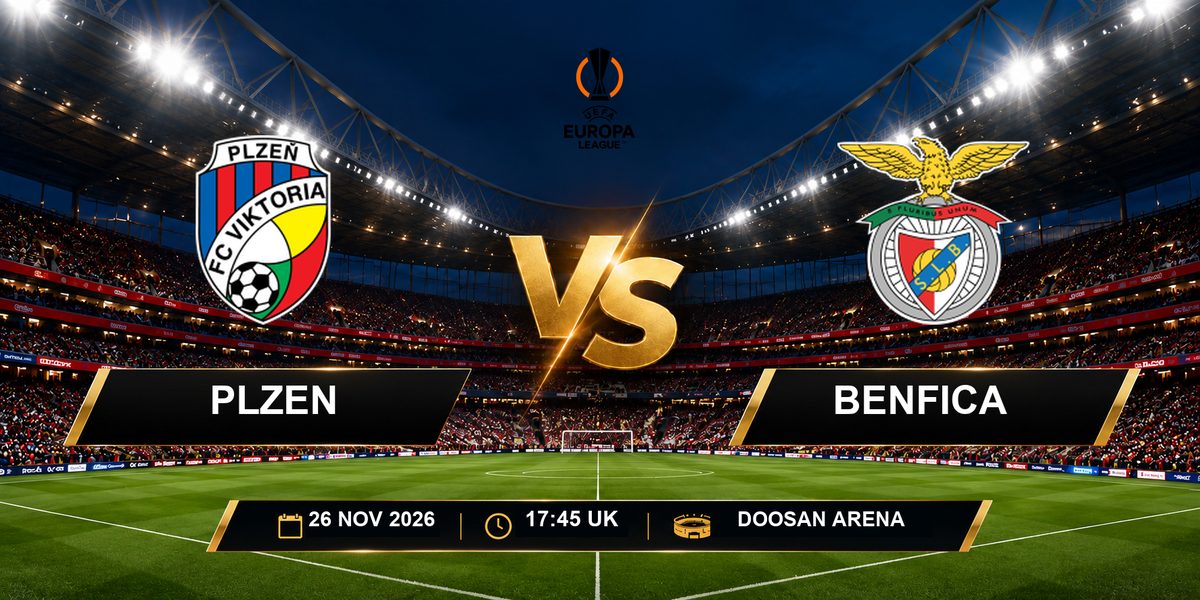
The clearest storyline for this Europa League trip is whether Viktoria Plzeň’s tightly managed matchday procedures and a potentially fraught stadium entry will blunt Benfica’s away momentum and make the Doosan Arena a more hostile setting than form alone suggests. The game kicks off at 17:45 GMT on Thursday 26 November, with Plzeň hosting a Benfica side that has taken a commanding grip on this group. Marco Silva will travel with his usual media responsibilities — the Portuguese club published a press‑conference timetable and an open training slot — while UEFA have appointed Croatian referee Igor Pajač for the tie. Those organisational details matter: they frame how both teams will approach the early exchanges and the match build‑up.
Plzen
Plzeň’s club office has dominated the local narrative this week by publishing detailed safety and access guidance: strict ID checks, designated away seating in section U, gates opening at 17:15 and a recommendation that supporters be seated well before kick‑off (the club has also scheduled a pre‑match light/fire show). That level of control is intended to manage a large crowd and a high demand for tickets; it will shape when fans arrive and how the stadium atmosphere builds. The notice is an operational fact that could leave pockets of supporters queued late or entering en masse, which alters the normal match‑day rhythm for both teams.
Those logistical elements interact with Plzeň’s recent European and domestic pattern. Their results show inconsistency — an important away victory in Lillestrøm where Adu scored, contrasted with two defeats at the Doosan Arena in this group — so home is less of a fortress than the club would like. The club’s match‑day presentation, including the light show, seems designed to manufacture an edge; if entry delays or clustered arrivals increase vocal peaks at specific moments, Plzeň can try to exploit the first ten to twenty minutes when visiting teams are settling. That plan relies on the squad converting short bursts of intensity into clear chances rather than sustained control.
Facing Benfica, Plzeň must account for specific individuals and match control variables. Pre‑match coverage has singled out Gianluca Prestianni as Benfica’s standout creative outlet and Tomás Araújo as a key defensive presence who may be tasked with neutralising him. Plzeň’s coaching staff will have to allocate attention to that duel while also preparing for the way the appointed referee, Igor Pajač — who has recent experience refereeing Portuguese clubs — is likely to manage physical contests. In practical terms, Plzeň’s challenge is to manufacture disruptive moments at the right time without conceding the sustained positional control that allows Benfica to punish errors.
 Advertisement
Benfica
Benfica arrive in Plzeň with the outward trappings of a team in control of its European destiny; the club’s media schedule shows Marco Silva treating the trip seriously with a press conference and a short open training session at the Czech club’s training centre. Local reporting also flags a tight fixture rhythm for Silva’s squad — a cup tie on 22 November and a league match soon after — which has been highlighted as a selection and rotation pressure. The public programme suggests Silva will use the open session to sharpen the collective movements he wants to see while deciding how much to refresh his eleven for a short‑turnaround week.
The short recovery window raises legitimate questions about how much rotation Silva will employ, and that in turn alters how Benfica might approach the opening period in Plzeň. If Silva preserves core creative resources such as Prestianni, the team can aim to settle quickly and take the sting out of any manufactured noise from the stands; if he rotates to protect legs for domestic duties, Benfica may be more vulnerable to an early Plzeň onslaught. The club’s internal scheduling and the visible training plan indicate that Silva cares about control and clarity heading into the match, even if he has limited room to refresh bodies.
Benfica must also prepare for the small but material variables this trip throws up: the Doosan Arena’s entry procedures, the crowd choreography around the pre‑match show, and the officiating tendencies of Igor Pajač, who has recently worked in Portugal and whose style is being discussed in previews. Those are not on‑field players, but they affect how a game is refereed and how quickly possession patterns can be established. Silva’s staff will therefore need to brief the squad on managing stoppages and contested moments early so the team can assert its usual away strengths despite external noises and procedural interruptions.
Verdict
This is a contest where organisational and environmental factors matter almost as much as tactics. Benfica travel with clear group superiority and recognised creative weapons who can punish sloppy defending; Marco Silva’s public schedule and open training point to a desire for match clarity even with a congested calendar. Plzeň have attempted to manufacture advantage through strict access controls and a pre‑match spectacle, and those measures could yield a chaotic opening phase that favours a home side looking to unsettle. Overall, however, Benfica’s consistency in Europe and the presence of disruptive attacking talent give them the edge; our prediction: Benfica to win.
Tip
Tip: Back Benfica to win. The selection rests on Benfica’s superior form in this Europa League group and their ability to field decisive creative players, while Plzeň’s European home record and the likelihood of a scrappy, compressed start make a single, decisive home victory less probable.