


| 1X2 | Home | Draw | Away | |
|---|---|---|---|---|
|
Coolbet
|
4.80 | 4.32 | 1.66 | Go to Coolbet → |
|
ComeOn
|
4.90 | 4.40 | 1.62 | Go to ComeOn → |
|
Unibet
|
5.10 | 4.50 | 1.65 | Go to Unibet → |
|
Norsk Tipping
|
4.80 | 4.10 | 1.55 | Go to Norsk Tipping → |
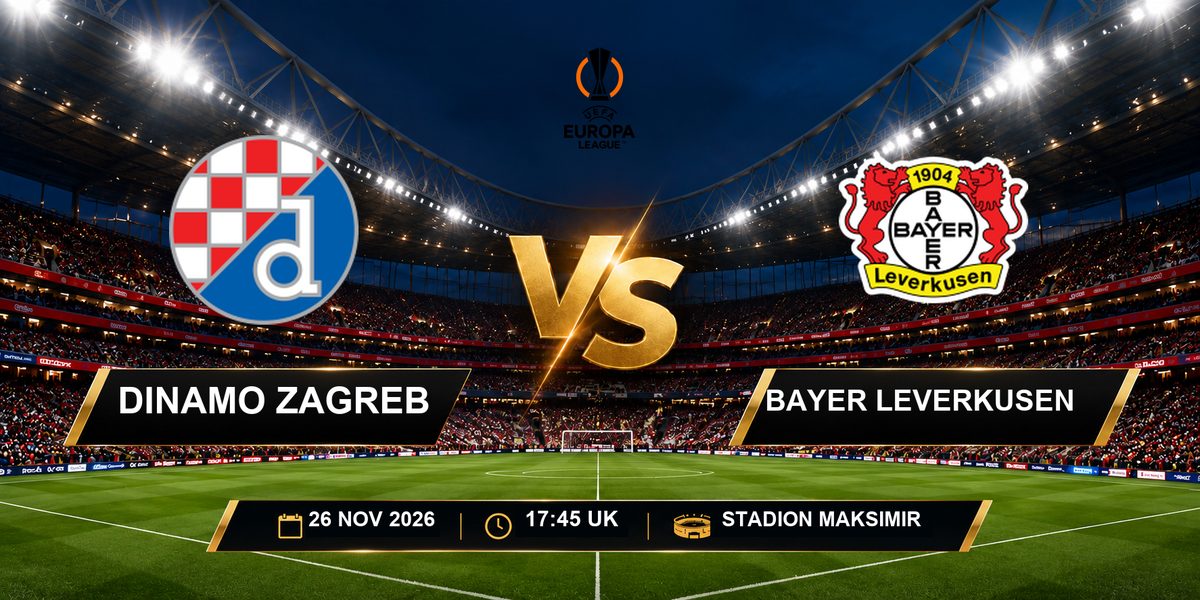
The central question for this tie is whether Bayer Leverkusen can navigate a congested schedule and a string of attacking absences without surrendering control to a Dinamo Zagreb side invigorated by Jerko Leko’s recent appointment. Dinamo arrive at Stadion Maksimir on the back of clear short‑term momentum and public backing from club president Zvonimir Boban, while Leverkusen travel with Carles Martínez warning of rotation after a heavy domestic win. Kick‑off is 17:45 GMT on Thursday in what will be the clubs’ first competitive meeting, a fresh matchup that both coaches must prepare for without prior head‑to‑head blueprints.
Dinamo Zagreb
Jerko Leko’s retention as first‑team head coach and the club’s decision to back him through the season is the defining development for Dinamo this month. That backing followed immediate positive results, notably a 2–0 Europa League victory at Sunderland and two domestic wins which have been presented in Croatian and wider media as evidence that Leko has steadied the ship. Those outcomes matter here because they change the internal narrative: the squad arrives in the Leverkusen match with a clearer mandate under Leko and a dressing‑room momentum that can lift performance levels even against superior opponents on paper.
Availability is a concrete complication for Dinamo. Centre‑back Scott McKenna is listed out with a muscle injury and attacking midfielder Robert Mudražija is also sidelined for the game. Losing McKenna affects more than a name on the teamsheet; it forces the coach to reshuffle the central defensive partnership and places extra emphasis on the remaining defenders’ capacity to handle high‑quality front men. Mudražija’s absence reduces a creative option in midfield, which will influence how Dinamo attempt to construct attacking patterns against a Leverkusen side that can still field pacey pivots even when rotated.
Facing Leverkusen, Dinamo’s immediate task is to exploit familiarity with Maksimir and the short‑term confidence Leko has engineered. The novelty of this fixture — the first competitive meeting between the clubs — means Leverkusen cannot rely on historical scouting; Dinamo can present unpredictability in personnel and approach. That unpredictability combined with the absences leaves Leko with a selection puzzle: he must balance defensive solidity without McKenna while finding ways to hurt a Bundesliga side that remains dangerous even when asked to rotate.
 Advertisement
Bayer Leverkusen
Carles Martínez’s public emphasis on squad depth after the 4–0 win over Paderborn frames Leverkusen’s immediate outlook: rotation is not just possible, it is a stated part of match planning because of fixture congestion. The club itself has signalled a congested schedule with Europa League commitments followed by a Bundesliga trip to Dortmund, and Martínez has made clear he will manage minutes accordingly. That management stance matters because it raises the possibility of fringe players stepping into high‑leverage European minutes in Zagreb.
The injury list complicates Martínez’s selection options. Martin Terrier is reported out with a muscle/hamstring problem; Kennet Eichhorn is unavailable through illness; Guéla Doué has a calf complaint, and aggregators list additional doubts such as Ibrahim Maza, Moussa Diaby, Christian Kofane and Nathan Tella. Those unavailabilities principally affect Leverkusen’s attacking and creative stocks, reducing Martínez’s ability to field his preferred front line. It pushes the coach to decide whether to prioritise a relatively full‑strength display to secure European progression or to protect certain starters for the Bundesliga run‑in.
Dinamo present specific threats that test Leverkusen’s choices: Leko’s recent away win at Sunderland and domestic victories show the Croatians are not a passive European opponent. Leverkusen must therefore weigh the risk that a rotated attack could struggle to break down a side buoyed by a coherent recent run and home backing. At the same time, Leverkusen’s defensive record in Europe — a series of clean sheets before the Marseille defeat — suggests their back line can remain a stabilising factor even if forward choices are altered, which is the calculation Martínez will have to make in selecting a side that can both control the game and preserve players for domestic commitments.
Verdict
This tie will be decided by selection and adaptation rather than pedigree alone. Dinamo’s season‑defining personnel decision to keep Jerko Leko has produced tangible short‑term lifts in results and belief, and those wins, plus Maksimir’s unfamiliarity for Leverkusen, give the hosts a platform to trouble the visitors. However, Bayer Leverkusen possess a deeper squad and defensive reliability in Europe that should compensate for some attacking absences; Carles Martínez’s rotation rhetoric carries risk but also ensures rested athletes in key areas. On balance, Leverkusen’s superior resources and recent defensive form edge them through a testing night in Zagreb. Our prediction: Bayer Leverkusen to win
Tip
Tip: Back Bayer Leverkusen to win. The recommendation rests on Leverkusen’s overall squad depth and European defensive form, combined with their position of responsibility in the group; despite notable attacking doubts and the likelihood of rotation, the visitors look most capable of securing the single result they need to preserve control of their European campaign.