


| 1X2 | Home | Draw | Away | |
|---|---|---|---|---|
|
Coolbet
|
3.08 | 3.15 | 2.49 | Go to Coolbet → |
|
ComeOn
|
3.10 | 3.25 | 2.25 | Go to ComeOn → |
|
Unibet
|
3.30 | 3.05 | 2.28 | Go to Unibet → |
|
Norsk Tipping
|
2.95 | 2.90 | 2.30 | Go to Norsk Tipping → |
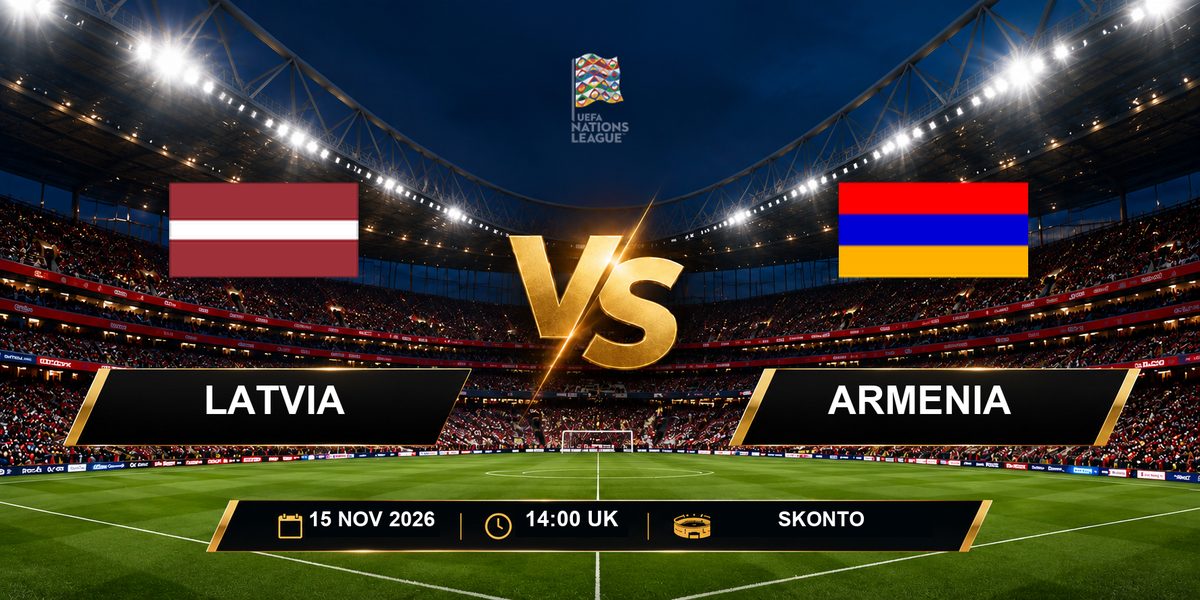
Armenia travel to Skonto to face Latvia at 14:00 GMT on Sunday 15 November in a fixture framed by Armenia’s decision to use this international window to blood attacking options while several senior forwards recover from injury. Latvia, led by Paolo Nicolato, return to Riga after a stoppage‑time defeat in Podgorica and the coach has publicly demanded improvement in “decisive episodes” across the squad. The contest therefore pits Armenia’s experimental attacking plans under Yeghishe Melikyan against a Latvia side trying to tighten late‑game concentration and integrate youthful options.
Latvia
Paolo Nicolato’s immediate priority is obvious from his post‑Montenegro remarks: the fine margins where matches are decided. His press conference singled out finishing and concentration in key moments, and the latest match report confirms the coach must manage temporary absences — Maksims Toņiševs missed the Montenegro trip for family reasons and Markuss Strods was unavailable with illness — while offering a first senior call‑up to Ivans Patrikejevs and the return of Jānis Ikaunieks to the squad. Those personnel notes shape selection choices: Nicolato now balances experience with youthful energy and must decide whether to lean on established figures to stop late lapses or to accelerate integration of Patrikejevs and Ikaunieks to inject spark up front.
How Nicolato transforms his words into selection will determine Latvia’s approach here. If he prioritises defensive solidity in the closing stages, expect more conservative substitution patterns and a bench geared to see out the final 20 minutes; the coach has highlighted decisive episodes as the area needing repair, which suggests a preference for players trusted in concentration‑heavy moments. The loss in Montenegro came via a late winner, a specific symptom that makes game management and late substitutions a likely focus at Skonto rather than wholesale tactical overhaul. The psychological and practical consequence is that Latvia may be reluctant to gamble excessively with untested attacking gambits when a result is on the line.
Against Armenia’s travelling party, Latvia face the complication of an opponent explicitly experimenting up front. Melikyan’s stated intent to test forwards in this window means Nicolato cannot prepare only for a settled target man; he must also prepare for the unpredictability that comes with fringe players seeking to impress. That places a premium on disciplined defensive work from Latvia’s backline and midfield to limit chances for trialled attackers, and on set‑piece organisation at both ends — areas Nicolato has flagged as decisive. The coach’s squad selection choices will therefore be shaped as much by temperament and composure as by raw ability.
 Advertisement
Armenia
Yeghishe Melikyan has been explicit that injuries have reshaped his selection and intentions: several first‑choice names, including Eduard Spertsyan and Vahan Bichakhchyan, remain on the sidelines for the moment, with Grant‑Leon Ranos’ recovery also discussed publicly. In consequence Melikyan described the current window as an opportunity to blood alternatives and confirmed Artur Miranyan, absent for the Cyprus game with a minor issue, travelled and is part of the matchday group. The federation sent a reduced 23‑player delegation to Riga and five members of the earlier training list did not travel, a constraint that narrows Melikyan’s substitution options and forces prioritisation of which youngsters earn minutes.
That personnel squeeze has already produced a concrete tactical shift: Melikyan switched to a 4‑1‑4‑1 in the Cyprus match because of availability and to create attacking balance, and he signalled his intention to test Artur Gharibyan and Grant‑Leon Ranos in competitive minutes. The practical effect in Riga could be twofold. First, Armenia will present unfamiliar attacking profiles that can unsettle a Latvia defence unused to those specific run patterns and link‑up play. Second, the smaller bench means Melikyan might either stick with the experimental front‑line long enough to evaluate them or manage minutes carefully to protect fitness; Miranyan’s inclusion gives him additional flexibility to replace an underperforming forward without reverting immediately to the sidelined senior names.
Off‑field dynamics add another layer. A public exchange between Melikyan and Ararat‑Armenia has become a minor selection story and could shape media focus on certain individuals, notably Zhirayr Shaghoyan at club level. While federations have not signalled direct changes to availability because of the dispute, the friction increases the value of squad harmony and may push Melikyan to favour players whose club situations are uncomplicated. Finally, UEFA’s appointment of Greek referee Vasilis Fotias — noted locally for a strict disciplinary profile this season — means Armenia must balance their attacking experimentation with care in physical duels and penalty‑area incidents, particularly if fringe forwards are still learning to time challenges and hold their nerve under pressure.
Verdict
This game centres on Armenia’s willingness to use the window to trial forwards against a Latvia side attempting to eradicate late‑game frailties. Armenia travel with a focused, slightly reduced squad but a clear attacking agenda: Melikyan has said he wants to test Gharibyan and Ranos and has Miranyan available after a minor issue, which suggests real intent to press for goals rather than simply defend a point. Latvia’s coach has demanded greater concentration and must manage recent absences while integrating youth, but the home side’s late concessions in Podgorica and Armenia’s targeted offensive tests tip the balance. Our prediction: Armenia to win
Tip
Tip: Back Armenia to win. The decision rests on Armenia’s purposeful forward experimentation—Melikyan has publicly framed this window as a chance to give competitive minutes to Gharibyan and Ranos while Miranyan travelled with the squad—and Latvia’s recent tendency to concede late goals combined with short‑term absences for key players. Armenia arrive with a clearer attacking brief, and Latvia’s emphasis on fixing “decisive episodes” suggests a fragile corrective rather than an immediate turnaround, making an away victory the most persuasive market selection.