
| 1X2 | Home | Draw | Away | |
|---|---|---|---|---|
|
Coolbet
|
2.20 | 4.00 | 3.10 | Go to Coolbet → |
|
ComeOn
|
2.27 | 3.95 | 2.75 | Go to ComeOn → |
|
Unibet
|
2.25 | 3.95 | 3.10 | Go to Unibet → |
|
Norsk Tipping
|
2.15 | 3.65 | 2.80 | Go to Norsk Tipping → |
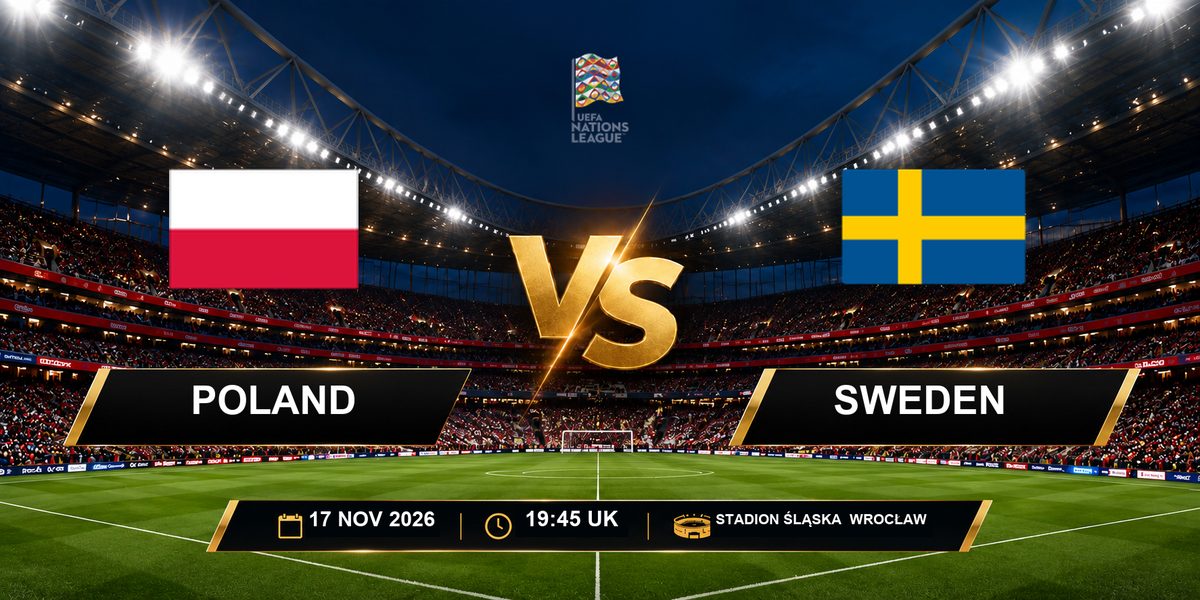
Poland host Sweden at Stadion Śląska in Wrocław on Tuesday 17 November, kick-off 19:45 GMT, with very different incentives driving the two teams. Sweden arrive with the group already sewn up after their 3–2 victory over Bosnia, which gives Graham Potter scope to rotate and experiment. Poland, meanwhile, sit third and effectively need a result to keep their campaign alive; the captain Robert Lewandowski’s late arrival from the United States has become the defining subplot for Jan Urban’s selection decisions. How Poland balance urgency with the captain’s travel-related fitness will shape the contest more than conditional league mathematics.
Poland
Poland’s immediate headlines have been constrained to availability: the federation confirmed Przemysław Frankowski and goalkeeper Bartłomiej Drągowski left the November camp for fitness reasons, and Arkadiusz Pyrka received a late call-up as cover. Crucially the official UEFA match-day squad lists include Robert Lewandowski, who flew in from the United States and is available for selection; that presence alters both expectation and how Urban might allocate minutes. The federation framed the withdrawals as medical, not disciplinary, which narrows the conversation to pragmatic rotation rather than selection controversy.
Those personnel developments force a pragmatic choice from the coach. With domestic options drafted in and a cup-tied captain arriving after travel, Poland are likely to adjust how they deploy senior players, whether by using Lewandowski as an early impact substitute or by asking him to lead a full bench of younger recruits. The loss of Frankowski removes one outlet on the flank and forces a reshuffle of wide roles; Drągowski’s departure means continuity in goal is a live issue, and whoever starts will carry extra responsibility against a Sweden side that can pick its moments. The squad composition suggests Poland will have to temper the shape they want with the players actually available on the night.
Sweden’s forward threat places a clear task on Poland’s reworked backline. Potter’s side have repeatedly tested opposition defences with direct running and set-piece moments this window, and Poland must manage those individual duels without some of their preferred options. The home team’s response will hinge on how Urban configures the squad around Lewandowski’s presence—whether he becomes a target for early long balls, a short-burst finisher or a platform to occupy Sweden’s centre-backs—and how well domestic call-ups like Pyrka fit into those game plans against a well-drilled Swedish attack.
 Advertisement
Sweden
Sweden go to Wrocław with fewer selection headaches than it looks: Besfort Zeneli and Patrik Wålemark were formally withdrawn from the camp, but Dejan Kulusevski has rejoined the squad and Graham Potter can point to recent form, notably Viktor Gyökeres’ two penalties in the 3–2 win over Bosnia. Potter has publicly framed the trip as an opportunity to give minutes to players who have not featured as often, and the clinical returns from front-line players mean there is genuine flexibility. Those absences reduce one element of depth, yet Sweden still travel with match-winners available.
The practical effect of Sweden’s clinching of the group is selection freedom. Potter can rest individuals who have carried heavy minutes, integrate returns like Kulusevski in managed doses, or test tactical variations without risking promotion. That latter option matters against a Poland side that must chase the game; Sweden can choose to match intensity in key phases or sit back to draw Poland out and exploit turnovers. Even rotated, Sweden possess players capable of altering the match quickly, and Potter’s options allow him to respond during the game rather than be forced into reactive changes.
Facing a Poland desperate for points changes how Sweden can approach the fixture’s final third. Poland are likely to send bodies forward in search of equality and a late winning goal, which hands Sweden both counter opportunities and set-piece responsibility to close out the game. The specific matchup to watch is whether Sweden deploy Gyökeres and Kulusevski in tandem to stretch a makeshift Polish defence or instead use one as a super-sub to take advantage of spaces that open when Poland push men forward. Sweden’s choices will be made easier by knowing promotion is already secured; they can prioritise winning the individual battles that matter rather than the table.
Verdict
Poland’s situation is stark: a recent home defeat to Romania and squad withdrawals have left Jan Urban with limited margin for error, even though Robert Lewandowski’s availability gives them a psychological lift. Sweden head into this fixture with momentum and the tactical latitude that comes from having already clinched the group, and Graham Potter has match-winners to call upon whether he fields his strongest XI or rotates. Poland’s need to press for a result risks exposing the makeshift elements of their defence, while Sweden can choose how and when to engage. Our prediction: Sweden to win.
Tip
Tip: Back Sweden to win. Sweden travel with confidence from their 3–2 victory over Bosnia and the freedom to select deliberately after clinching the group, while Poland’s last-minute withdrawals and Lewandowski’s transatlantic arrival complicate Jan Urban’s ability to field a fully settled side; those factors favour a Swedish victory.