
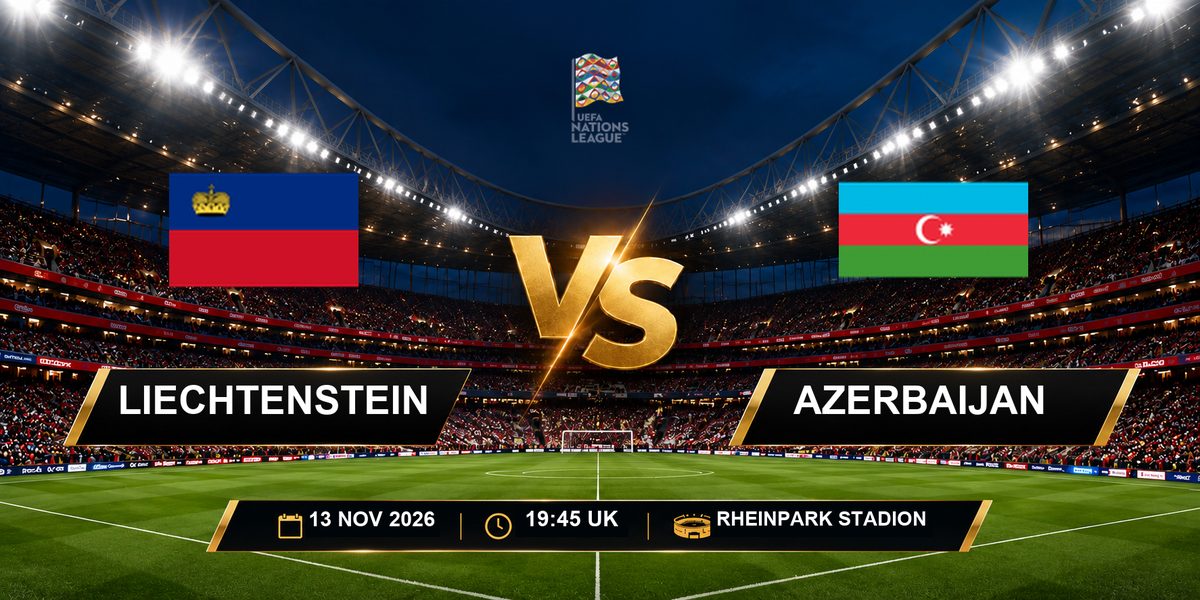


This tie in Vaduz is effectively a promotion decider: Azerbaijan can secure top spot in Group D2 with a win, while Liechtenstein arrive with fresh faces and the return of a goalkeeper from a long-term injury. Konrad Fünfstück announced a 23‑man squad that includes two first‑time call‑ups and highlights the constraints of part‑time internationals, while Ayxan Abbasov has publicly signalled changes after a goalless draw in Baku. Kick‑off at the Rheinpark Stadion is scheduled for 19:45 GMT on Friday, 13 November.
Liechtenstein
Fünfstück’s squad announcement on 5 November underlined the selection dilemmas facing Liechtenstein: defender Yonas Abidi and goalkeeper Tim‑Tiado Öhri are new to the group, Öhri explicitly returning from a long cruciate‑ligament lay‑off, while Lars Traber has withdrawn for work reasons and several players are listed as injured with on‑call replacements named. Those personnel notes frame this international window as much about availability and opportunity as form; the federation release and local coverage make clear the manager has had to expand his standby list to maintain numbers for the November double‑header. The human element — part‑time players balancing employer commitments — was emphasised by Fünfstück in pre‑match comments and shapes how much preparation time and training cohesion the coach can demand ahead of a decisive fixture.
Those realities materially change the contest. Öhri’s return is a clear boost to goalkeeper options and to squad experience on matchday, but coming back from an ACL hiatus also means Fünfstück must judge fitness carefully rather than assume instant impact. The inclusion of Abidi and other debutants gives Liechtenstein an immediate chance to blood younger players in a meaningful match at home, yet it also risks introducing unfamiliarity in defensive pairings and match procedures. For a small nation that has often relied on continuity, forced changes into the backline and among specialists who juggle jobs could blunt the team’s usual defensive cohesion just when Azerbaijan will arrive determined to avoid a stalemate.
Facing Azerbaijan in Vaduz brings a specific tactical and psychological challenge. Liechtenstein have evidence that they can make life uncomfortable — the sides drew 0‑0 in Baku on 1 October — and the home setting offers another chance to frustrate the visitors. Still, the promotion stakes will shift the dynamic: Azerbaijan know a win has outsized value and Abbasov’s public insistence that changes are coming signals they will attempt to be more incisive than in the first meeting. Fünfstück must therefore decide how much to prioritise a compact, conservative approach to preserve a result versus using the fixture to give new players meaningful minutes. The squad limitations identified in the federation release mean that balance will be a central selection headache.
 Advertisement
Azerbaijan
Abbasov inherits a side that tops the group and arrives unbeaten in recent outings, a formline that includes a 1‑0 victory over Lithuania and the goalless draw with Liechtenstein. In the aftermath of the Baku stalemate he publicly accepted responsibility and told reporters there would be changes, an explicit managerial signal picked up by domestic coverage. Those comments have framed this return leg as a test of Abbasov’s willingness to tinker — not for the sake of novelty, but to find personnel and combinations capable of breaking low‑block opponents, an issue his staff highlighted after the draw.
How Abbasov’s stated intent translates into selection matters for this match. Reporters have interpreted his remarks as pointing to both tactical fixes and rotation, which is credible given the fixture congestion and promotion implication; changes could mean fresh attacking legs or a different balance in midfield to improve chance creation. That approach is risk‑reward: new combinations could unlock Liechtenstein’s rearguard, but they also require players who are match‑sharp and comfortable in international minutes. Azerbaijan’s recent consistency suggests the coach is operating from a position of strength, making targeted alterations rather than wholesale overhaul the likeliest route to the necessary victory.
The Ázeris face a compact home‑return opponent that has proven stubborn, and the physical context in Vaduz — as Fünfstück warned about gruelling matches — could blunt some of the visitors’ rhythm. Liechtenstein’s decision to recall Öhri and introduce debutants raises the prospect of an unpredictable defensive profile; Azerbaijan must be ready for variations in personnel and set‑piece routines. With promotion on the line, the challenge for Abbasov is clear: coax greater cutting edge from his side while avoiding the complacency that can come when a single result would secure the group. The public accountability he accepted after October’s draw increases the managerial necessity to deliver, not experiment for experimentation’s sake.
Verdict
This fixture tilts in Azerbaijan’s favour because of the combination of context and intent: they lead the group and Abbasov has signalled concrete changes to overcome a low‑scoring deadlock, which suggests a more purposeful attacking approach than in Baku. Liechtenstein’s squad news is notable — the return of Tim‑Tiado Öhri and two first‑time call‑ups speak to regeneration and local pride — but the small nation’s chronic selection constraints and part‑time player commitments limit how much fresh preparation they can squeeze into a decisive match. Expect a tight game where Azerbaijan’s superior depth and the clear incentive to secure promotion deliver a narrow away win. Our prediction: Azerbaijan to win.
Tip
Back Azerbaijan to win to nil: the visitors have conceded scarcely in the group and can clinch top spot with a victory, while Liechtenstein have yet to score in Nations League action and have made personnel changes that strengthen their squad but may not translate into attacking fluency. This market reflects Azerbaijan’s need for a decisive result and the low‑scoring pattern from the earlier meeting.