


| 1X2 | Home | Draw | Away | |
|---|---|---|---|---|
|
ComeOn
|
11.50 | 7.10 | 1.22 | Go to ComeOn → |
|
Unibet
|
12.00 | 7.00 | 1.25 | Go to Unibet → |
|
Norsk Tipping
|
12.00 | 6.60 | 1.20 | Go to Norsk Tipping → |
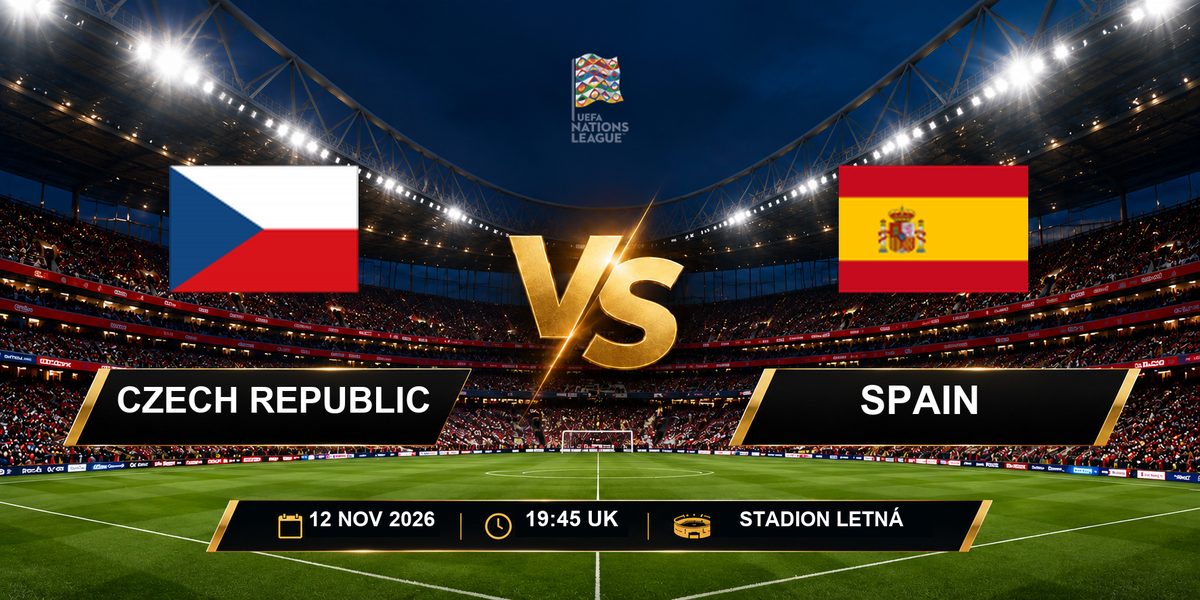
Czechia welcome Spain to Prague knowing that organisation and set-piece execution could be central to their hopes of unsettling the visitors. Spain arrive with greater technical depth but must balance their selection decisions against another demanding international fixture. The hosts will seek to make the contest uncomfortable, while Spain will try to control possession and limit opportunities for quick Czech transitions.
Czechia
Santi Denia used a press conference in Prague to set a combative, detail‑driven tone: he repeatedly returned to the same points — the match requires near‑perfection, set‑pieces are a route to goals and defending transitions must be tightened. He also said selections, including the goalkeeper, were effectively settled pending final training checks, signalling he wants continuity at the back rather than late tinkering. Denia’s Spanish background and the fact he addressed the media in Spanish add an interesting human layer; that shared language and cultural familiarity could sharpen his preparation for Spain-specific patterns and personnel, allowing him to drill targeted routines against predictable threats.
Those public commitments change how Czechia will approach the game in practical terms. Emphasising set‑pieces suggests Denia will give extra time to dead‑ball work and to selecting players who can deliver or attack aerial situations, while the “transitions” comment implies tighter organisation at the moment of losing possession. A settled goalkeeper and a settled spine hint at a manager choosing defensive familiarity over experimental gambles; in a fixture where marginal gains matter, that selection stability could reduce the kind of lapses that large nations exploit. The manager’s language also shows he is treating this as a finely measured task rather than a broad tactical experiment.
Facing Spain, Czechia’s immediate challenge is twofold: force the game into moments where rehearsed plans pay off, and limit the damage when Spain have the ball. Spain’s squad contains multiple players from one club group, and while those club relationships can create intermittent overloads and sharp passing combinations, Denia’s side have been publicly coached to expect possession and hit back on set‑pieces and counters. If Czechia can convert a well‑worked dead‑ball or a quick transition into a decisive opening, the points at stake would swing wildly in Prague’s favour — but that depends on execution, the very feature Denia said must be “near‑perfect.”
 Advertisement
Spain
Luis de la Fuente’s squad announcement on 6 November and subsequent press messaging frame this pair of fixtures as “crucial,” but his rhetoric also underlined pragmatic squad management with England on the horizon three days later. The list contains five Barcelona players — Pedri, Fermin López, Lamine Yamal, Pau Cubarsí and Joan García — and the federation publicly confirmed injuries to Rodri, Dani Olmo and Eric García; those absences force selection choices in both midfield and defence. Reports that Yamal is being managed for a minor right‑knee issue add another wrinkle: a game plan built on rotation is likely rather than wholesale weakening, but certain attacking accelerants may be rested or given reduced minutes.
That balance will alter Spain’s match construction. With Rodri and Eric García unavailable, the coach must reconfigure the midfield and centre‑back pairings, which can affect tempo control and recovery in transitions — precisely the phases Denia has highlighted. Meanwhile, the Barcelona contingent’s recent club minutes were explicitly referenced in Spanish reporting about fitness and workload; players with heavy club schedules may be spared lengthy spells in Prague, so Spain may deploy a mixed eleven designed to control the ball without overcommitting the most fatigued individuals. Managing Yamal’s minutes in particular could dilute Spain’s direct wide threat, but it does not erase the technical superiority the squad retains.
Spain’s specific response to Czechia’s declared strategy will be telling. De la Fuente has room to pick technically adept replacements able to keep possession and take the sting out of set‑piece opportunities by sheer territorial control, yet the absences in defensive cover and a probable rotation policy open a window for Czechia’s dead‑ball and transition plans to be effective. The earlier meeting between the teams this month favoured Spain, but Prague presents a different task: if Spain’s rotated options still execute the passing patterns and retain composure under Czechia’s anticipated pressure, they should remain the team likelier to find the decisive moments.
Verdict
This is a contest of priorities. Spain possess the depth to absorb absences and to rest key individuals while maintaining technical control, and Luis de la Fuente’s public insistence that the fixtures are “crucial” suggests he will not wholesale deprioritise Prague despite England three days later. Czechia’s manager has narrowed the team’s brief to set‑pieces and transitions and has adopted selection continuity to maximise execution of those plans, which makes Prague a potential banana skin. On balance, Spain’s overall squad quality, the Barcelona contingent’s available options and de la Fuente’s pragmatic rotation policy still give the visitors the edge in a tight game. Our prediction: Spain to win
Tip
Spain to win. The squad naming and press‑conference signals from de la Fuente show rotation will be measured rather than radical, and despite the confirmed absences of Rodri, Dani Olmo and Eric García Spain retain enough technical pocketed quality — plus several Barcelona options — to manage possession and blunt Czechia’s rehearsed set‑piece focus.