


| 1X2 | Home | Draw | Away | |
|---|---|---|---|---|
|
Coolbet
|
1.12 | 7.75 | 30.00 | Go to Coolbet → |
|
ComeOn
|
1.11 | 7.40 | 23.00 | Go to ComeOn → |
|
Unibet
|
1.11 | 8.00 | 26.00 | Go to Unibet → |
|
Norsk Tipping
|
1.07 | 7.20 | 21.00 | Go to Norsk Tipping → |
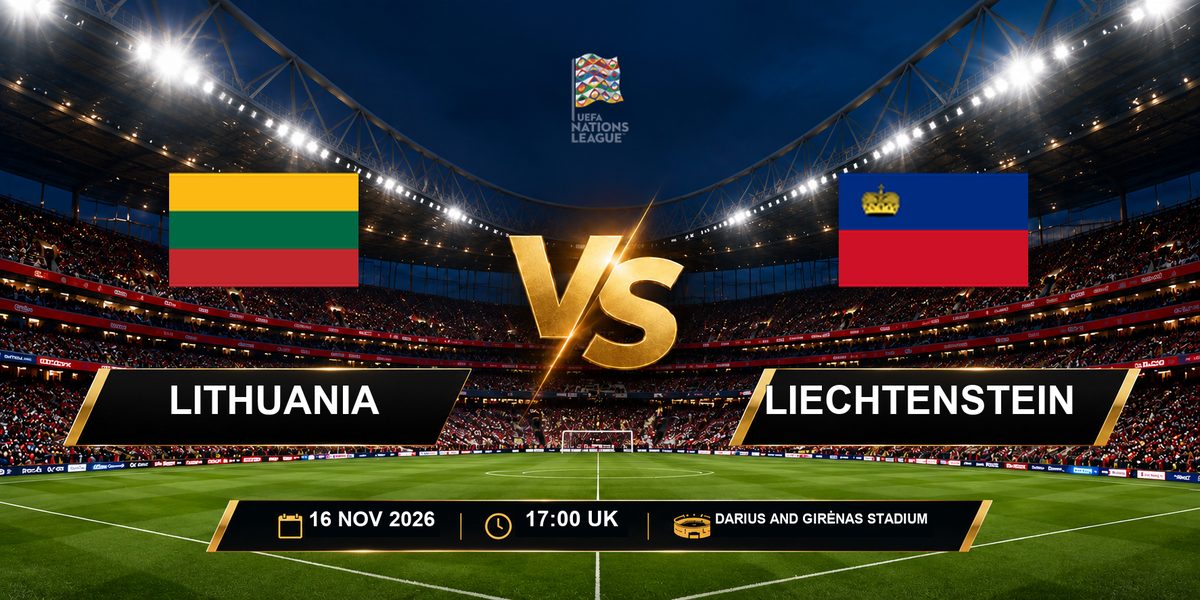
Mindaugas Čepas faces his first official Nations League match as Lithuania's head coach on Monday, a fixture in Kaunas that pivots on his public insistence that the team must start converting chances more routinely. Liechtenstein arrive in constrained numbers after a November call‑up disrupted by work commitments and injuries, though the visitors will welcome the return of goalkeeper Tim‑Tiado Öhri from an ACL lay‑off. Kick‑off at Darius and Girėnas Stadium is 17:00 GMT on 16 November, and the clash carries real consequence for both sides as they seek a finish to the international window they can build on.
Lithuania
Čepas has begun this window by reshaping the squad and setting a clear priority: finishing. The federation confirmed his first match‑day duties included a 0–0 friendly with Suriname, after which he publicly singled out poor chance conversion as the principal area for improvement and signalled that selection and training would emphasise attacking threat. The squad list published at the start of November underlined the changes he faces: Edvinas Gertmonas and Edgaras Utkus were reported injured and omitted, while Modestas Vorobjovas and Adriano Lickūnas were left out for tactical reasons. Additionally, the federation reported Armando Kučio is serving a two‑match suspension for official fixtures, a disciplinary development that removes one selection option for Čepas unless an appeal changes that status.
Those availability shifts force Čepas to prioritise where he can extract goals from the players he has on hand. His post‑friendly comments about 'realisation' imply sessions this week have targeted composure and finishing work, and the omission of experienced names through injury and suspension narrows the pool from which he can pick those game‑deciding forwards or late‑arrival substitutes. Practically, this puts emphasis on match‑day choices around attacking personnel and substitutions designed to maximise the opportunities Lithuania can fashion; the head coach has made clear that altering the final touch is the corrective he wants to see in Kaunas.
Lithuania will also approach the game with the psychological benefit of having beaten Liechtenstein on their trip earlier in the campaign, an outcome that serves as a recent template for what worked against this opponent. Čepas’s first competitive match gives him the chance to turn the neatness of that template into a more productive performance at home, especially if his adjustments in training translate into clearer service and better finishing in the penalty area. The combination of a manager setting an explicit goal, home conditions and a squad re‑cast around attacking answers shapes Lithuania’s immediate match plan: test for early openings and demand composure in front of goal.
 Advertisement
Liechtenstein
Fünfstück’s squad announcement for November made clear he has had to juggle limited availability: several regulars were unavailable because of work or minor injuries, the federation published an enlarged on‑call list to cover last‑minute absences, and a couple of younger players have been pulled into the group. The most eye‑catching positive is Tim‑Tiado Öhri’s reintegration into the goalkeeping group after a lengthy rehabilitation from an anterior cruciate ligament tear, and 19‑year‑old Yonas Abidi was named as a first‑time call‑up. The staff openly framed the month as one of contingency management rather than routine selection.
Those personnel realities alter Fünfstück’s options for Kaunas. Öhri’s return provides the defence with a potentially stabilising presence; reintroducing a keeper who has completed his recovery can rebuild confidence at the back and influence how the manager sets up for set‑plays and crosses. Conversely, the expanded on‑call list and a few absentees mean the final squad may change late, which risks disrupting fluency and the degree of understanding between Liechtenstein’s defensive unit and midfield. For a small federation, that kind of turnover often leads to pragmatic choices in selection and match‑day substitutions intended to protect the backline first.
Facing Lithuania, Fünfstück must balance the positives from Öhri’s comeback against the reality that several usual contributors are not present. Against a home side whose coach has publicly targeted finishing, Liechtenstein’s immediate task is to be organised in the penalty area and to make the most of limited attacking moments. The visitors will also be cautious about losing an early goal that would force them into uncomfortable reshuffles; their November squad construction suggests Fünfstück will prize defensive cohesion and the chance to frustrate rather than open the game up.
Verdict
This match is shaped by two clear narratives: Čepas’s first competitive test and his insistence on remedying Lithuania’s finishing, and Liechtenstein’s need to manage a thin squad while welcoming a goalkeeper back from serious injury. On balance, Lithuania possess the managerial momentum and the home platform to press for the decisive breakthrough, especially given the head coach has already worked toward sharper attacking practise after the Suriname friendly. Liechtenstein’s personnel constraints and the potential for late changes complicate their preparation; Öhri’s return helps but is unlikely to offset Lithuania’s combined advantages at Darius and Girėnas. Our prediction: Lithuania to win
Tip
Tip: Lithuania to win — Čepas’s explicit focus on converting chances, coupled with the home setting and Liechtenstein’s constrained call‑up situation, makes a home victory the most probable market outcome for this fixture.