
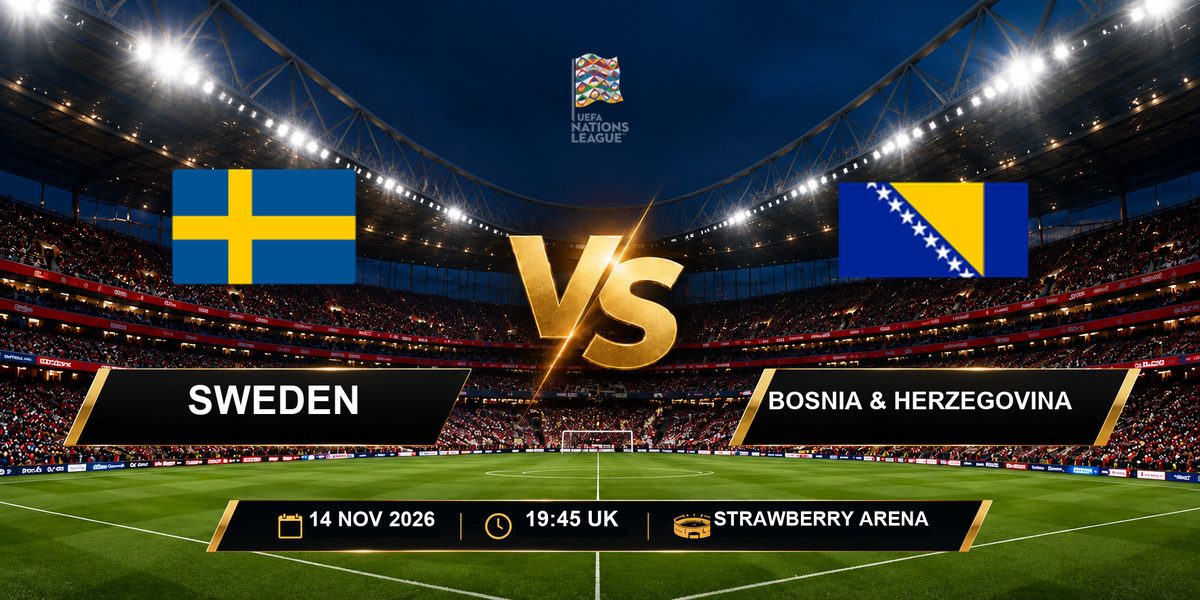

Sweden host Bosnia & Herzegovina at Strawberry Arena on Saturday in a fixture in which Bosnia arrive with clear defensive absences while Sweden juggle selection choices in attack. The suspension of centre‑back Tarik Muharemović and Dennis Hadžikadunić’s calf problem have forced Sergej Barbarez into a last‑minute reshuffle, a disruption that sits at the heart of this match’s narrative. Graham Potter, meanwhile, has the return of Dejan Kulusevski to weigh against the decision to manage Viktor Gyökeres’ workload. Winning here carries added weight for both sides, with the table positions still finely poised.
Sweden
Graham Potter’s squad selection headlines are straightforward and selection‑driven: Dejan Kulusevski has been reinstated after a lengthy knee lay‑off and will add a familiar creative option, while Viktor Gyökeres was noticeably rested in an open training session in Valencia as a workload management measure ahead of the match. Svenskfotboll scheduled a coach‑and‑player press conference at Strawberry Arena on 13 November, signalling that Potter was prepared to discuss those availability choices publicly ahead of kick‑off and that final team news could include rotation intended to protect key players for the condensed schedule later in the week.
Those personnel permutations change how Sweden can approach the contest. Kulusevski’s presence gives Potter an extra outlet between the lines and an option to vary attacking patterns without necessarily relying on Gyökeres to play the full 90 minutes; that flexibility matters because Sweden must balance the need to secure the result here with the short turnaround before travelling to Poland. Resting Gyökeres in training does not confirm he will miss the match, but it does indicate the coach is prepared to manage minutes; if Potter opts for a front line with Kulusevski and a fresher striker option, Sweden can press their numerical advantage in wide areas while keeping a close eye on player welfare.
Facing a Bosnia side missing key defenders alters Sweden’s match plan in practical terms. The absence of Muharemović and Hadžikadunić presents Sweden with a clearer target for set‑pieces and wide overloads; their dead‑ball routines and delivery into the box take on greater importance because the replacement pairing will be less settled and possibly less accustomed to handling Sweden’s aerial threats. Potter’s decisions on who starts centrally and which offensive balance he selects will therefore be decisive: he can use Kulusevski’s creativity to open channels for crosses or conserve him as a second‑half impact substitute to exploit any late defensive lapses.
 Advertisement
Bosnia & Herzegovina
Sergej Barbarez arrived in Sweden without two defensive regulars after naming his 26‑player squad at the end of October. Tarik Muharemović is suspended for accumulation of cards and is therefore unavailable for the trip, while Dennis Hadžikadunić has left the camp with a calf muscle injury that regional reporting describes as a rupture and which the federation and local outlets estimate will keep him sidelined for a short spell. Those absences force Barbarez into a reshuffle that is not merely cosmetic; they remove both continuity and the left‑side defensive options he had been counting on for the Nations League window.
The defensive disruption will shape Barbarez’s game management in obvious ways. Replacing a suspended centre‑back and an injured full‑back at short notice reduces his margin for error in defensive organisation and likely compels him to prioritise compactness and set‑piece discipline over expansive wing play. Given the compressed schedule — Bosnia host Romania three days later — Barbarez will need to balance the immediate necessity of keeping the match tight in Solna with the medium‑term goal of preserving players for the next fixture, which could see him favour conservative early substitutions or a more risk‑averse midfield configuration.
Despite the defensive depletion, Bosnia’s evolving attacking profile is their counterweight. The side’s post‑Džeko transition has accelerated the development of a younger forward group, with names like Kerim Alajbegović and Ermin Mahmić surfacing as the new focal points in recent coverage. Barbarez can lean on those players’ mobility and readiness to exploit transitional moments; against a Sweden side that may rotate and manage minutes, Bosnia’s pace and willingness to run in behind could cause problems if Swedish cohesion slips, particularly on the break or from quick throw‑ins and second‑phase situations.
Verdict
Sweden enter this fixture with the clearer hand because the selection variables are largely controlled by Potter and because Bosnia’s defensive absences are confirmed and unambiguous. The loss of Muharemović to suspension and Hadžikadunić to a calf problem forces Barbarez into an unsettled backline that, in a match played at Strawberry Arena, is particularly vulnerable to Sweden’s set‑piece delivery and the chance creation that Kulusevski provides if used. Bosnia still possess attacking intent through their younger forwards and could punish any complacency, but the combination of home advantage, squad depth and the manager’s ability to protect key players across the international window leans this balance toward the hosts. Our prediction: Sweden to win
Tip
Tip: Sweden to win. The most concise market choice reflects Bosnia’s confirmed defensive disruptions and Sweden’s capacity to adjust personnel without enforced last‑minute changes; if Potter fields Kulusevski and manages Gyökeres’ minutes smartly, Sweden should control enough of the match to take the three points.