
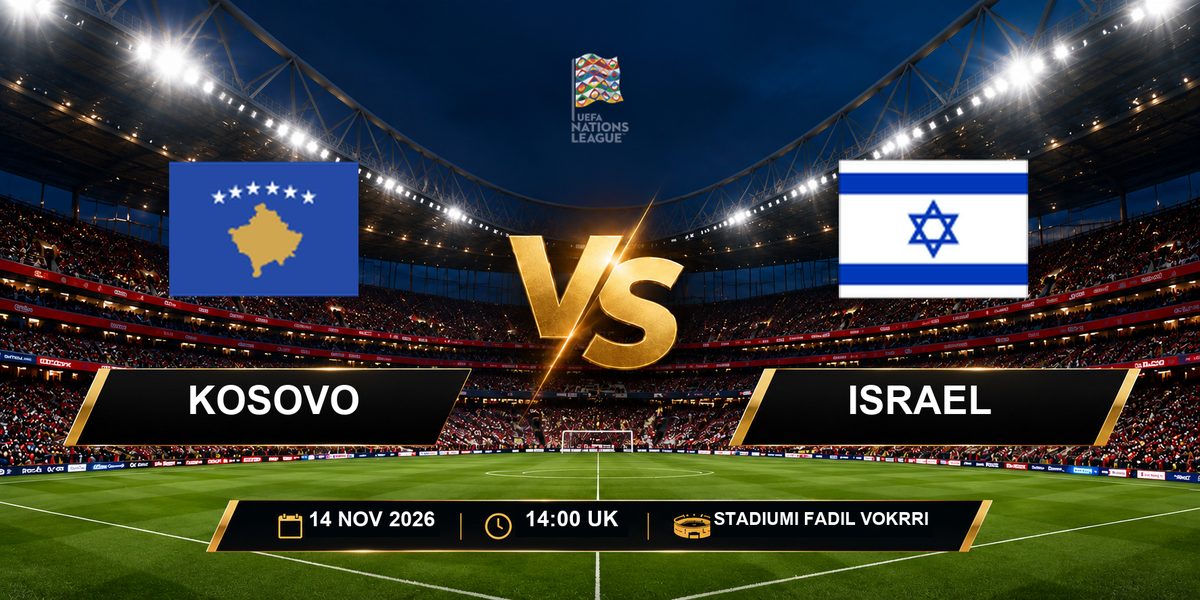


Kosovo host Israel at Stadiumi Fadil Vokrri on Saturday with kick-off at 14:00 GMT, and the contest has been shaped as much by preparations as by form. The central story is the surface and travel plan: Kosovo’s pitch has been declared match‑ready after recovery works, while Israel announced they will prepare at home and travel only two days before kick‑off. That operational split, combined with a handful of confirmed absences on both sides, frames a tie where selection and match‑day conditions could be decisive.
Kosovo
Franco Foda arrives at his home stadium dealing with a clear availability problem at the heart of his defence: Lumbardh Dellova has been released from the squad with injury and Albian Hajdari is also unavailable, forcing Foda to alter centre‑back options for a fixture that matters in the group. Winger Ermal Krasniqi missed the penultimate training session with a muscular concern and is due for medical assessment; his status remains to be confirmed but his potential absence would reduce one of Kosovo’s proven attacking outlets. Off the field, the federation has confirmed the pitch is fit to host the match and the president’s public visit to the squad has added visible national attention ahead of kick‑off, while organisers resold away sections because Israeli supporters will not travel.
Those personnel constraints materially change Foda’s selection choices. With two established central defenders out, he will be forced to pick replacements who have less recent international minutes; that raises questions about cohesion and who will marshal set‑piece moments, without implying a particular tactical switch. The repaired playing surface works in Kosovo’s favour because their players have been training on it and the federation has prioritised game‑ready preparation, meaning match‑day familiarity could offset some defensive disruption. The lack of travelling Israel fans also increases the home‑support factor, which may influence how Kosovo manage game tempo and substitutions.
Kosovo face an Israel team that has signalled a conservative logistical approach and who were held to a 0–0 draw by Kosovo earlier this month in Nations League competition. Foda must weigh the benefits of continuity against the need for defensive solidity: if Krasniqi is unavailable, the coach may look for different attacking balance to compensate for a shaken centre‑back pairing. The immediate task is straightforwardly selectional — to pick personnel whose recent club rhythm and familiarity with the Fadil Vokrri surface minimise the risk of mistakes under pressure while still posing an attacking threat to a visiting side low on confidence.
 Advertisement
Israel
Ran Ben Shimon has framed this fixture as an operational challenge: he told media that his squad would prepare domestically and travel two days before kick‑off because of concerns over the Pristina surface and local weather. That decision prioritises physical freshness and control of training but reduces time for his players to adapt to the pitch and the stadium environment. Ben Shimon also confirmed notable absences from his selected group: Eliel Peretz is unavailable and Mohammed Abu Fani was omitted from the squad, while the goalkeeper position remains a “genuine dilemma” with three contenders in contention, making the starting XI’s defensive spine a live selection issue.
Those availability issues alter Israel’s match plan in practical terms. Losing Peretz and Abu Fani narrows attacking permutations and could limit Ben Shimon’s options for mid‑game adjustments when chasing the match, while uncertainty in goal forces the coach to weigh shot‑stopping against command of a possibly less familiar surface and distribution under pressure. Choosing a keeper who copes with the conditions is no small matter given Ben Shimon’s explicit concerns; the late travel schedule compounds that, because the chosen keeper will have minimal time to learn the pitch’s day‑of‑match characteristics.
Facing Kosovo’s repaired surface and local crowd, Israel must find a way to impose themselves quickly despite the logistical compromises. Their recent Nations League results have left them under pressure in the group, and the team’s last meeting with Kosovo ended goalless, which underlines how fine margins could decide Saturday’s game. Ben Shimon’s selection constraints mean Israel may have to prioritise defensive organisation in the first hour and then rely on individual flashes of quality from the remaining attacking personnel to unlock a side missing two defensive mainstays.
Verdict
This fixture arrives as a contest of adjustments rather than clear tactical experiments. Kosovo’s home preparations — a reinstated pitch and the advantage of training time on it — give Franco Foda a tangible edge, but the absence of Lumbardh Dellova and Albian Hajdari is a serious selection headache that could expose them to mistakes in central areas. Israel’s late travel plan and the publicised goalkeeper uncertainty blunt their pre‑match rhythm and reduce acclimatisation time, while losing Eliel Peretz and Mohammed Abu Fani limits attacking variety. On balance, the combination of home familiarity, an intact support base and Israel’s compromised preparation suggests Kosovo are better placed to take the three points if Foda’s makeshift defence holds together. Our prediction: Kosovo to win
Tip
Tip: Back Kosovo to win. The repaired Fadil Vokrri surface and full home preparations favour Kosovo, while Israel’s decision to prepare at home, a late travel schedule and several confirmed absences create selection uncertainty that is likely to make them more vulnerable on match day.