
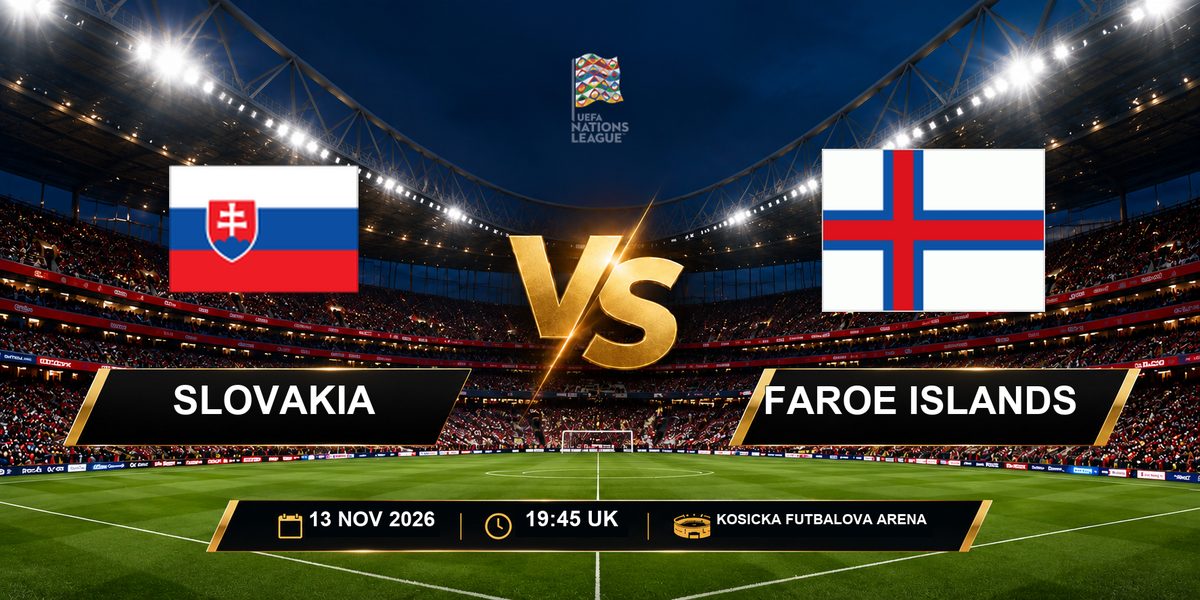
This match in Košice centres on Slovakia’s midfield reshuffle after Stanislav Lobotka’s withdrawal and the recall of Albert Rusnák, a concrete personnel subplot that will shape how Vladimír Weiss approaches selection and in‑game management. The Faroe Islands arrive with their 24‑man squad announced by the FSF, a late attacking switch (Ási Dam in for Ari Olsen) and the return of Jákup Biskopstø from a long‑term injury — developments that materially change their options on the day. Kick‑off is at 19:45 GMT on 13 November at Kosicka futbalova arena and the fixture carries immediate stakes for Slovakia’s Nations League objective. The midfield duel and Weiss’s decision whether to secure a point then preserve players for Astana form the clearest narrative running through the evening.
Slovakia
Slovakia’s preparation is dominated by two confirmed availability items reported by Sportnet: Stanislav Lobotka will miss the November double‑header with a ligament/ankle issue sustained playing for Napoli, and Martin Dúbravka remains unavailable due to meniscus trouble while Denis Vavro was not released by his club. To cover Lobotka’s absence Weiss has called up Ludovít Reis and the squad includes an unexpected recall of Albert Rusnák, confirmed by Seattle Sounders’ club release; those moves change who can influence midfield control and creative supply for the national side on Friday. Weiss has also signalled a selection dilemma: if Slovakia secures the promotion/qualification objective in Košice with a point, he may rest key names for the next fixture in Astana, which directly affects how conservative or expansive his starting choices and early substitutions might be.
Lobotka’s absence forces a recalibration of midfield roles rather than wholesale tactical reinvention. Rusnák’s recall provides a senior creative profile who can be deployed either to start or as an impact substitute; his club form underpinned the call‑up and offers Weiss a known attacking creator when organising rotations. Ludovít Reis represents a more direct answer in numbers and energy in central areas and the balance between Reis and Rusnák — starter versus bench — will determine whether Slovakia presses to win at pace or prefers controlled possession and risk management. The lack of Dúbravka and an unavailable Vavro reduce immediate defensive cover, which increases the value of a steady midfield that shields the backline in the opening phases.
Against the Faroe Islands this reconfigured Slovakia midfield has to accomplish two tasks: secure the point required for the group objective and manage the match tempo so that any necessary rotation later in the week is feasible. The coaching message that a single result could allow rest means early game management will be a subplot: whether Weiss opts for an experienced-looking midfield to close out a point, or seeks an early lead to take control and then make substitutions, will determine how the players named actually influence the contest. Slovakia also carry the practical advantage of playing in Košice and can lean on a deeper pool of league‑experienced pros even with the specific absences noted.
 Advertisement
Faroe Islands
The Faroe Islands’ camp is defined by FSF announcements: a 24‑player squad named for the window includes forwards Adrian Justinussen and Meinhard Egilsson Olsen, Ási Dam was called in on 9 November to replace the injured Ari Olsen, and Jákup Biskopstø joined the squad on 11 November after returning from a long‑term lay‑off. FSF coverage also notes the team completed training on local grass in Košice and quotes from midfielders indicating confidence; those published items confirm the exact personnel Weiss will face and show the coaching staff has been able to adapt to the late availability change. The late replacement and the return from injury are significant because they alter bench composition and the set of final on‑pitch combinations available to the Faroe coaching team.
Biskopstø’s reintegration is the clearest single boost for the Faroes: having him fit provides an extra midfield fulcrum and option for rotation across 90 minutes, which matters against a Slovakia side adjusting its centre of gravity after Lobotka’s absence. The arrival of Ási Dam for an injured attacker shifts wing/forward choices; the change is late enough that it likely affects match‑day planning and the sequence of substitutes. FSF’s reporting that the squad arrived and trained on the local surface indicates the players have had at least one session on Košice grass ahead of kick‑off, reducing acclimatisation friction and making their personnel changes more immediately deployable.
Facing Slovakia, the Faroes’ selection news and returning personnel pose a specific challenge: they can present fresh mid‑block options to contest the central areas now vacated by Lobotka, and their choice of attacking personnel gives the coaching staff levers to exploit any Slovak rotation. The two sides met in early October and drew 1–1, a recent result that underlines the Faroes’ capacity to take a point off Slovakia when matches are tight. That history, combined with the restored midfield option and a late attacking call‑up, means the Faroese approach in Košice will be calibrated around exploiting any early disjoint in Slovakia’s rebuilt centre rather than overcommitting to sustained pressure.
Verdict
The match is a midfield contest shaped by absences and recalls: Lobotka’s confirmed injury and Rusnák’s recall are the defining Slovak developments, while the Faroes’ late call‑up and Jákup Biskopstø’s return materially improve their matchday choices. Slovakia arrive as the side able to control the narrative — they can take the simpler route to their Nations League objective by managing the game to secure a point and then rotate for Astana, but the presence of Rusnák gives Weiss the option to push for a decisive result if desired. The Faroes, refreshed by squad returns and a late replacement on the wings, are well equipped to make this uncomfortable and showed in October that they can take a result. On balance, home advantage, squad depth and the tactical flexibility offered by Rusnák’s recall make Slovakia likelier to convert superiority into three points. Our prediction: Slovakia to win
Tip
Tip: Back Slovakia to win. The decisive factors are Slovakia’s ability to manage the fixture to secure their Nations League objective while still possessing a veteran creative option in Albert Rusnák to change the game if required; the Faroe Islands’ late squad changes and returns improve their competitiveness but do not neutralise Slovakia’s home advantage and deeper rotation options.